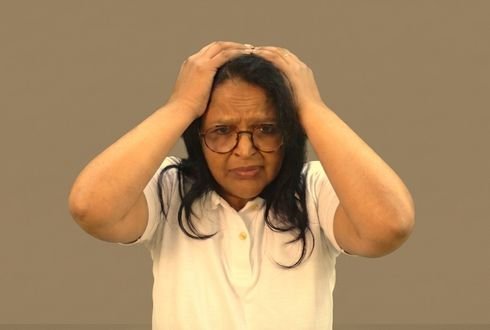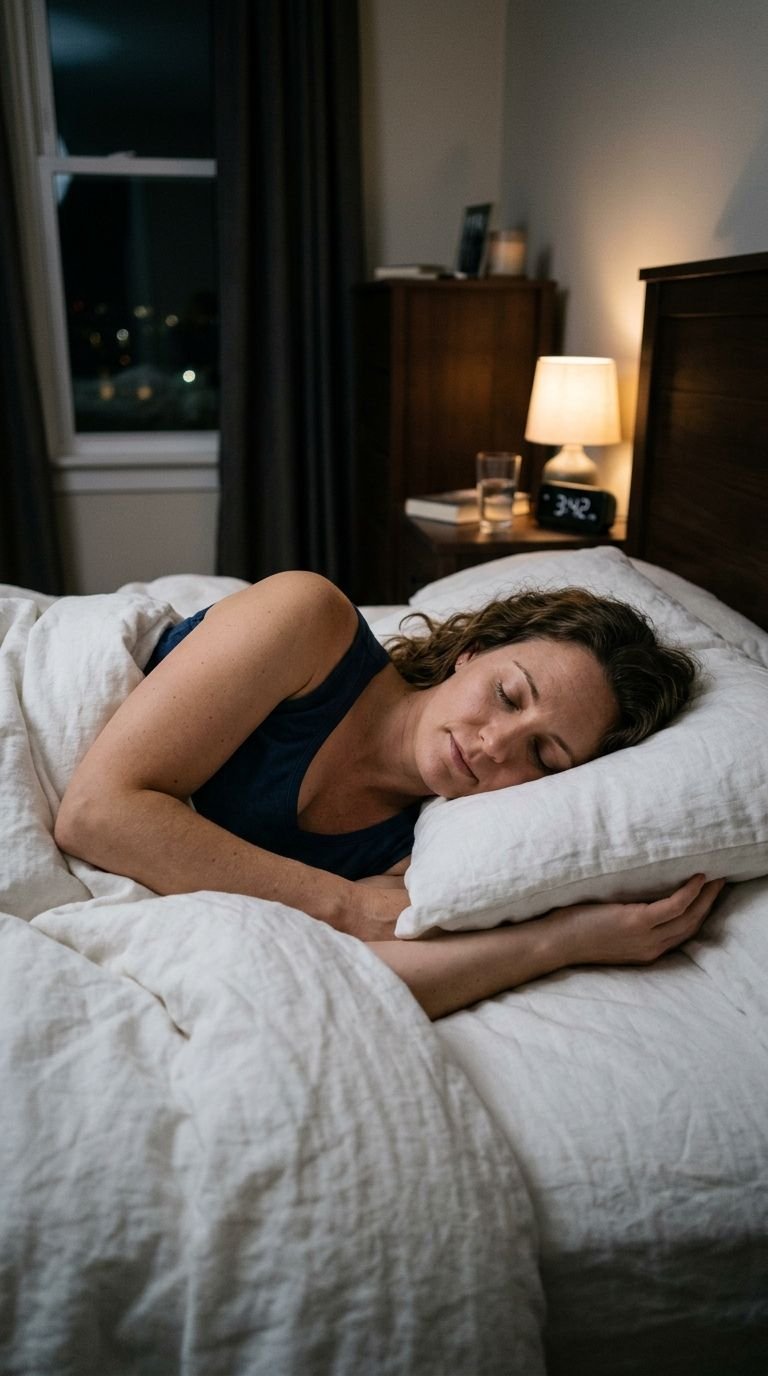
They feel the same from the inside. Flattened, foggy, sore, and wide awake at three in the morning. So how are you supposed to know which one you are dealing with?
If you are a woman in Ireland somewhere between forty and sixty, you have probably had this conversation with yourself at some point. Usually in the car, or standing at the kettle, wondering whether to ring the doctor or just go to bed earlier for a fortnight and see.
You are not being indecisive. The two genuinely do overlap, and almost nobody explains where.
So let me lay it out plainly. And then let me tell you about a third possibility that comes up far more often than either, and that almost nobody mentions.
First, this is real, and the numbers are not small
The Menopause Hub surveyed more than two and a half thousand Irish women in 2025. Thirty six percent had considered giving up work entirely because of their symptoms. Twenty nine percent had cut their hours. Thirty two percent had stepped back from a promotion. Eighty three percent said their symptoms were affecting how they performed at work.
A separate University of Galway survey the same year found that one in ten women leave their job outright because of how severe their symptoms became.
Read those again. These are not women who are not coping. These are women who are coping so hard that the only lever left to pull is their own career.
Whatever you are dealing with, you are not the only one in the car park deciding whether to make the phone call.
Where menopause and burnout genuinely overlap
Here is why you cannot tell them apart from the inside. They share almost every symptom you actually notice day to day.
Exhaustion that sleep does not touch. Broken sleep, especially the three in the morning kind. Brain fog. Losing the word you wanted. Reading the same email three times. Feeling irritable in a way that is not like you. Aching joints. Low mood. A shortening fuse with the people you love most.
Every one of those appears on both lists. So when a woman says she cannot tell which it is, she is not being vague. She is being accurate.
Three questions that actually separate them
There are a few differences worth knowing. None of these are diagnostic, and I am not a doctor. But they are useful.
One. Is your cycle changing?
This is the clearest signal there is. Periods getting closer together, further apart, heavier, lighter, or stopping. Alongside hot flushes or night sweats. Burnout does not do that. If your cycle has changed, the hormonal side deserves a proper conversation with your GP.
Two. What happens when you actually rest?
Take a real break. Not a weekend of catching up on the washing. Two weeks, properly off.
Classic burnout eases with genuine rest. Not instantly, and not completely, but you feel the difference. If you come back from two weeks away and feel exactly as flattened as you did before you left, rest is not the missing piece and something else is going on.
Three. Is it your whole life, or just your work?
Burnout tends to be situational. It attaches to a job, a person, a period of relentless pressure. Women often notice they feel more like themselves on holiday, or at the weekend, or in the company of friends who ask nothing of them.
Hormonal change does not care where you are. It comes on holiday with you.
The third possibility nobody mentions
Here is the part that I think matters most, and it is the part almost no one is saying out loud.
Plenty of women go and do the sensible thing. They see the doctor. They get the bloods done. They start HRT, or they take the break, or they hand back a piece of the job. And it helps. Genuinely, it helps.
And they are still exhausted.
Not as bad as before. But nothing like the woman they remember being. And now there is no explanation left, which is somehow worse, because the thing that was meant to fix it has already been tried.
This is the woman I meet most often. She has done everything right and she is still running on empty.
What I would put to her is this. Menopause and burnout are both pressures on the body. They are not the same thing as the body losing its ability to recover from pressure.
Your body has its own recovery process. It is what let you go out on a Saturday in your twenties and be perfectly grand on Sunday. It is what carried you through a bad night with a small child and still had you functioning by lunchtime.
That process does not switch off after one hard week. It winds down slowly, across years of steady load. Leading. Delivering. Being the one who holds it together.
And when it has wound down far enough, treating the pressure does not give you your energy back, because the pressure was never the only problem. The problem is that the thing that used to bring you back is no longer switching on.
That is not menopause. It is not burnout. It will not show on a blood test, because a blood test looks for disease, and there is no disease here. And it is the reason so many women are told everything is fine while feeling nothing of the sort.
I spent over fifteen years in that gap
I ran a business. I raised a child. I told everyone I was grand.
My back hurt so constantly that I had stopped calling it pain and started calling it me. That is just how I am built, I told myself. I woke every morning feeling like I had not slept at all.
I did the sensible things. I was told the results were fine and that I should try to manage my stress. So I pushed on, because pushing on was the only thing I knew how to do, and because stopping felt like failing.
It took me years to understand that I was not failing at anything. My body had simply stopped doing something it used to do without being asked.
What changed was a method developed in Germany that works with the body's own recovery process instead of against it. I was deeply sceptical. I did not believe my body still had that capacity sitting inside it. Then I felt it for myself. The pain went. My sleep came back. No medication. No surgery.
I will not tell you the same will happen for you, because I do not know you and every body is different. What I will tell you is that I was not a special case.
What I would actually do, in order
Get the medical side looked at first. If your cycle has changed, or you have flushes, or anything at all has you worried, that is a conversation with your GP and it is not one I would ever ask you to skip or postpone. Nothing I do replaces medical care and it is not meant to.
Then test the rest question honestly. Take the proper break and pay attention to what you feel when you come back. That answer tells you more than another article will.
Then, if you have done both and you are still flat, look at recovery itself. Not more sleep. Not more discipline. Whether your body is still able to use the rest you are giving it.
Where to start, including from your own kitchen
Most women start with the Active Programme. One session where I show you exactly what to do, then one month of home training you run yourself. Small light plates placed on the skin for a few hours a day. No medication, no equipment to buy, nothing to swallow. The plates are loaned to you as part of the programme and come back to me at the end. It is €195.
You can do all of it online. The session runs as a live video call, in English or German, and the plates are posted to you. That matters if you are in Dublin or Galway or Donegal, or if the honest truth is that finding a free morning to drive to Clare is the thing that would stop you starting at all.
If you would rather come in person, my studios are in Newmarket-on-Fergus in County Clare and in Limerick City.
If you would like to talk it through first
I offer a free 30 minute Clarity Call. No charge, and no pitch. We talk about what is actually happening for you, what you have already tried, and whether this is likely to be any use to you. If it is not right for you, I will say so plainly, and I will tell you what I would look at instead.
You leave the call with a clear picture either way. That is the whole point of it.
Your body has not lost the ability to recover. It has lost the signal it needs to start.
Sources: The Menopause Hub, Key Findings from the 2025 Peri/menopause Survey, and University of Galway, 2025 menopause workplace survey. The Recovery Signal is not a medical, psychotherapeutic or naturopathic treatment and does not replace medical diagnosis or care.